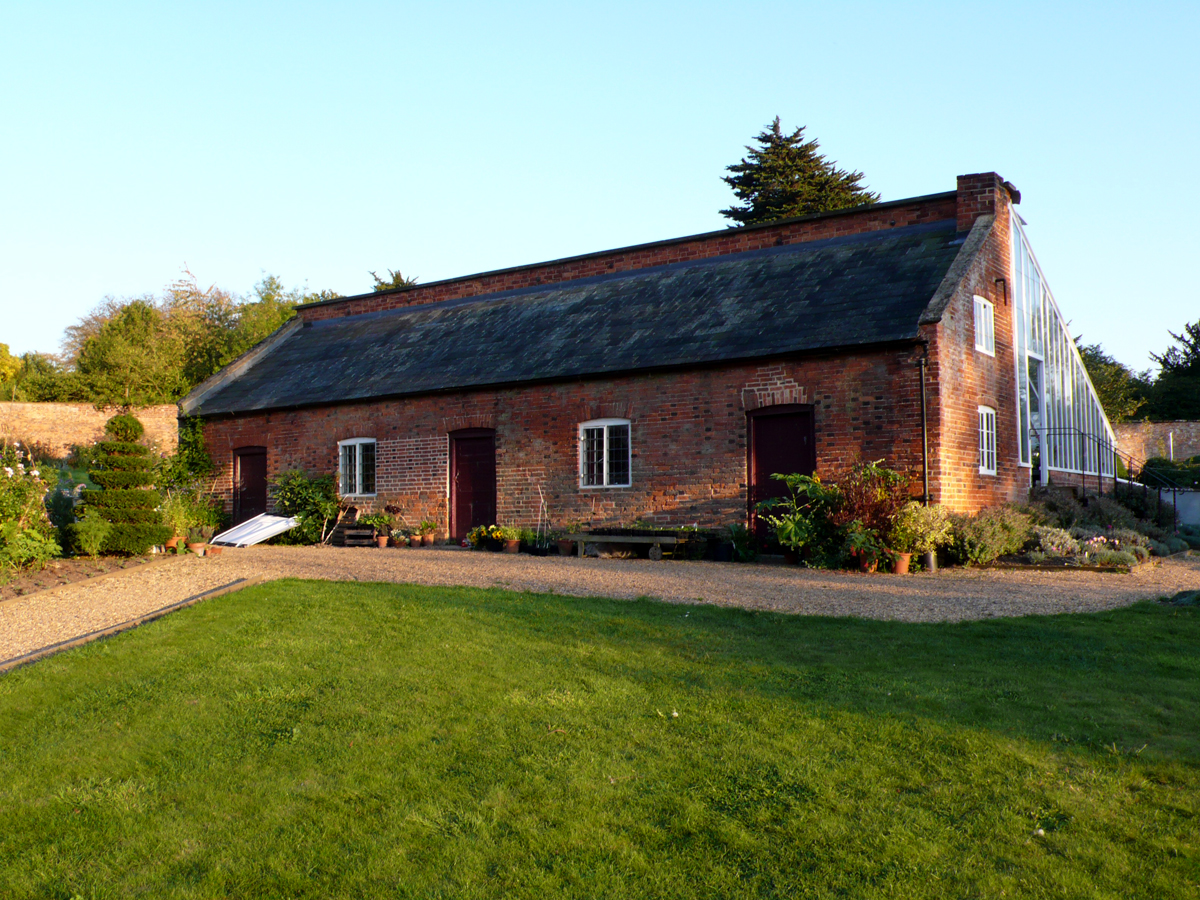
...One's statuary (b)
Allow it to provide a service for sheltering ladybirds, etc.
16 November 2011
12 November 2011
Ode to Uppingham Market
It's a good place to be on a Friday, even in the freezing fog. Its name is fitting: 'the town which is up'. The market square is the highest point of the hill that Uppingham sits atop and there is a devilish little alley connecting the hill and its wind directly to my stall. Yesterday, on the eleventh of the eleventh in the year eleven, there was nowhere I would rather have been. My 'pitch' is next to the Church in the corner of the square, and the bells rang out and the market place fell silent. People had gathered round the church entrance and they looked up at the steeple or down at the ground. It felt disrespectful even to look sideways. During the day aged soldiers walked about in their regalia and there was no one without a poppy.
Although I am not at the front of the market with the essentials (cut flowers and fruit) I have passing trade en route to the Post Office, Church and pub. There is also a barber and a Chinese takeaway, so all the world is here. All the people, often delightful, sometimes mad and occasionally grumpy are here too. A woman dressed in tweeds looks through my hand-printed cards, which she wants to buy, before fiddling with my oiltreated oak nail brush from Sweden, which attracts attention every week. 'This is a lovely nail brush,' she says. 'I'll just find my other half.' My heart sinks. Husbands are fine on their own but are not persuadable when accompanied by wives.
The browsing woman pulls a similarly be-tweeded man over, amongst protests of 'Don't be ridiculous!'
They stop and she points. 'Not even as a present for you?'
'No! don't be ridiculous! How much is it? That's ridiculous!'
'But you normally spend £4 on a plastic nail brush... '
'You're being ridiculous!' he shouts before hurrying away. She follows him and later they pass by again, still arguing.
A thick fog descends on the square up on the hill, and it's not even one o'clock in the afternoon.
Although I am not at the front of the market with the essentials (cut flowers and fruit) I have passing trade en route to the Post Office, Church and pub. There is also a barber and a Chinese takeaway, so all the world is here. All the people, often delightful, sometimes mad and occasionally grumpy are here too. A woman dressed in tweeds looks through my hand-printed cards, which she wants to buy, before fiddling with my oiltreated oak nail brush from Sweden, which attracts attention every week. 'This is a lovely nail brush,' she says. 'I'll just find my other half.' My heart sinks. Husbands are fine on their own but are not persuadable when accompanied by wives.
The browsing woman pulls a similarly be-tweeded man over, amongst protests of 'Don't be ridiculous!'
They stop and she points. 'Not even as a present for you?'
'No! don't be ridiculous! How much is it? That's ridiculous!'
'But you normally spend £4 on a plastic nail brush... '
'You're being ridiculous!' he shouts before hurrying away. She follows him and later they pass by again, still arguing.
A thick fog descends on the square up on the hill, and it's not even one o'clock in the afternoon.
10 November 2011
Keep Britain Tidy
Gardening can be like housework and for those of a tidy bent, this is a
frantically busy time of year. Leaves must be removed from pathways,
and they must be removed from steps. Yesterday I managed to turn the 'wild garden' at Brooke Hall into a kind of sitting room, and very tidy it was too. In a garden of 13 acres it would be
demented to get over-concerned about tidiness in all areas, but still the leaves must
be dealt with. It's really a matter of 'keeping the leaves on the move' as the head gardener puts it, and not allowing their accumulation
to kill whatever is trying to survive underneath. The
best way to do this is by blowing them away. Hoovering does happen, but in
smaller parts of the garden. Even then it feels like a ludicrous thing
to do, vacuuming around box parterres, underneath pleached limes which are surrounded by beech hedges. Whose insane planting plan was this? Didn't
they think about all the leaves?
In order to master the fine art of blowing, certain rules must be observed. Never make a leaf pile. We don't use rakes, and we don't pick up piles of leaves either. Leaves must be blown to an appropriate place, either under bushes, or out into a neighbouring field. Pushing leaves under dense or unwieldy shrubs like the gunnera above, can feel like sweeping dust under the carpet. Too much volume, too little cover. Flower beds with hardy perennials in them are not much good for smothering either. If blowing into an adjacent field it is important to blow carefully over the top of whatever leaves are already there, spreading all the leaves out in a considerate manner. Piles of leaves would act like parting waves when approached by a machine. Evenly spread leaves on the other hand can be crunched into instant mulch by a ride-on mower. Underneath the many trees at Brooke Hall are circles of brown, which comprise bite-sized leaves ready for the breaking down process.
It's a feast for worms. Sometimes, while pushing debris around, bigger leaves with pointy ends can stick determinedly into the ground. Despite the use of engine-powered equipment from Germany which I have been trained to operate at full throttle, it's a happy thought that the leaf is already being pulled quite a long way underground, and that there is an earthworm at the other end, holding on tight.
08 November 2011
Appreciating... Berberis & Co
... And pampas grass gives elegance a try, looking refreshingly cool amidst the red and yellow chaos.
03 November 2011
A Classic Weepie
The leaves of beech, and the trunk and bark of beech, are quietly beautiful for much of the year. It takes a while to come alive in spring, which is only really noticeable in beech hedges and topiary, still brown and crinkly when everything else has gone green. The late canopy in a beech wood suits bluebells just fine of course. At this time of year in the Wild Garden at Brooke Hall the acer and sorbus have gone a reliably mad red and supernatural orange-pink. But the beech sports every autumn colour, on one tree. When the sun shines horizontally across a cathedral-like beech it looks flood-lit. And a weeping cathedral-like beech (above) well, it's value-added, all year round.
For the perpetually confused: Beech left, hornbeam right. It's textural.
This beech column stands with another, beside a group of equally blameless yew columns. They bring a bit of structure to the front (or is it back?) door. But now, for a short time, it's discreetly wigging out.
For the perpetually confused: Beech left, hornbeam right. It's textural.
This beech column stands with another, beside a group of equally blameless yew columns. They bring a bit of structure to the front (or is it back?) door. But now, for a short time, it's discreetly wigging out.
01 November 2011
A Heated Debate
Most people love or hate a bonfire. It's unusual to quite like them. Some people aren't allowed them (Londoners, on health grounds). Others can only have them if they are land-rich (people from Connecticut need at least an acre of land, to protect the neighbours). But we country bumpkins in Middle England can muddle along how we like. Science with Peter has set up camp over at the Guardian and Observer allotment blog this week, and the theme is fire heaps, or bonfires. The Guardian likes a good row, so do join in. Just check for hedgehogs first.
31 October 2011
Notes from the Fire Heap
Some people hate the idea of fire heaps and worry that they may be illegal in some way. They cram as much as they can into their green bins and wait patiently for the fortnightly collection. Other people build heaps for burning, to complement their heaps for composting. They know that they will have a good source of potash by burning woody plants (which take years to break down), and weeds both annual and perennial, which could easily survive a domestic compost heap. These pyro enthusiasts tend towards the slightly older, more traditional person. I am not making any judgments on my friend Peter, who is a friend from Marsh Hall and a knowledgeable gardener, with a double-sized allotment in Northamptonshire. But Peter is passionately pro-fire 'with reservations'.
'I would say that the fire itself is carbon neutral,' he declares. 'It releases as much carbon dioxide as the burning plants removed when they were growing. Although... We are releasing it back into the atmosphere and that in itself is bad I suppose. But,' he continues rebelliously, 'those people who complain will gladly use a wood fire stove at home and take their children to a local bonfire party. AND an occasional fire to get rid of pernicious weeds is very small beer compared with a Chinese coal-fired power station!'
I sense that people like Peter enjoy everything about fires. But, he says, the soil enjoys it too.
'The bonfire ash is extremely good as a soil structurant,' says Peter, who uses words like 'structurant' quite freely. 'The soil here is very clayey and the calcined clay particles in the ash heap help to separate the clay platelet structure, making the topsoil more workable and friable.' Also, the potash created from burning the plants is in itself is a good fertiliser. 'Remember though,' he adds. 'Always store bonfire ash under a plastic sheet as the potash is soluble and will easily wash out with rainfall.'
Many allotments have their own Bonfire Code, naturally, which will include some of the following points:
• Check that you are allowed to have them; it helps if your allotment is on the edge of or just outside a village/town/city.
• Do not light a bonfire when the wind is blowing towards the inhabitants of said v/t/c. Monday is absolutely out, as some people still do their washing on Mondays, here in the middle of England.
• Ditto allotment neighbours: they don't wish to inhale your smoke.
• Look after your fire and prevent it from getting out of control and burning down hedgerows, etc.
• Do not burn plastic, which smells extra bad, or other more ambitious objects like bedsteads which should go to the local dump.
26 October 2011
Hots in the Cots
It's hard to say whether the people of the Cotswolds will ever fall out of love with Elephant's Breath or any colour offered by Messrs Farrow & Ball. So it is always a disproportionately massive relief to find something striking a different note. Like this pot of chili peppers. For the sake of symmetry there is another one on the other side, containing a different variety in a slightly mismatched Spanish pot. If the chatelaine had consulted the manual of good taste she might have put out some politely eccentric topiary, or a couple of safe standard bays. But with chili, it's a discordant look which is all the better for being temporary, and the Cotswold stone with fabulous lamp looks even better for it.
23 October 2011
Tough Cluck
Hen houses are a bit like people houses: the most attractive are not always the most practical. My friend Fran has sixteen rescue chickens and they live in a couple of wooden sheds. They prefer to lay their eggs in a large cardboard box and they dine out of old saucepans, tucked underneath one of these sheds. They would feel as unappreciative of a freshly-painted chalet as she would.
19 October 2011
But is it art
To the Serpentine Gallery in West London on Sunday where Piet Oudolf's flowery installation was having its last day. An exhibition of living things with a blackened backdrop, it was also a garden that was past its best by October 16. Eupatoriums were keeling over and papery actaeas made perpendicular shapes amongst the tall grasses. It was getting brown. At ground level the only flowers which were still going strong were the least unusual ones: geranium, anemone, aconitum.
It is always fun to see what the townies are up to on their time off. The Sunday garden visitor of England's heartland was replaced by an urban model in dark clothing. The touching of plants and petty pilfering were not in evidence; I heard no complaints of untidiness or requests for a cream tea. Instead of a head gardener on site a guard stood by the fire exit, not giving anything away. And so, we were having a different experience. The horticulturalists had long since come and gone. These visitors were Sunday art people, who had gone to a gallery and then the gallery next to the gallery. They looked at the display and walked away discussing it in the tones of respect usually reserved for high art.
13 October 2011
New Season Special
It isn't just hanging in there like the late summer flowers, and it doesn't say 'it's about to get cold' like the holly berry. It has just popped up out of nowhere, because its favourite time of year has come round again. This phytolacca has self-seeded itself and grown up in a place which it likes to call home: the bone-dry shade of a yew. Unnoticed in a walled garden at Brooke Hall, even when in flower, it suddenly has all the charm of perfectly ripe blackberries, condensed into a chunky wand. No prickles, just rich purple and dark green. These colours need a dying light.
In case of any sniggering at the back: News from Nowhere is perfectly aware that in some places the lovely and majestic Phytolacca is known as the American Pokeweed. In a word: context.
10 October 2011
More Science with Peter
Where does all the muck go?
With the second instalment of my other blog at the Guardian and Observer, it seems pertinent to be talking about manure and related topics. At this time of year conscientious people turn their thoughts to mulching: wood chip, home-made compost, leaf mould, whatever suits. Food growers and rose growers begin to consider muck by the barrow load, carefully sourced and well-rotted. People who plan ahead know that this will serve them well in the spring, after the frost has attacked and the worms have partaken. The 'solid waste' to use a grown up term, dissolves happily but what about the bulk, the part which has not passed through anybody's digestive system? Straw and wood shavings can take much longer to break down, sometimes five years. But what do I know? Here's Peter.
'The plant material (straw etc.) contains lignin, and rain breaks it down over time,' he clarifies. 'Acid rain performs this task but the process is speeded up many hundreds of times if the water has a higher pH. The proper term for this is alkaline hydrolysis.' Dismissively, Peter adds: 'It's a long chain thing.' In anticipation of an interruption he waves his hand. 'No questions. The process shortens the lignin and it then dissolves.'
There follows quite a lot of science on rain water seeping through carboniferous limestone in the Peak District, peat lignin breaking down, resulting in tea-coloured water, perfectly good to drink 'unless it has passed over a dead sheep or similar...' But regrettably there are space constraints.
So, to answer the other pressing question, 'Where do all the leaves go?' They go to the same place as the muck. It's got something to do with alkaline hydrolysis.
With the second instalment of my other blog at the Guardian and Observer, it seems pertinent to be talking about manure and related topics. At this time of year conscientious people turn their thoughts to mulching: wood chip, home-made compost, leaf mould, whatever suits. Food growers and rose growers begin to consider muck by the barrow load, carefully sourced and well-rotted. People who plan ahead know that this will serve them well in the spring, after the frost has attacked and the worms have partaken. The 'solid waste' to use a grown up term, dissolves happily but what about the bulk, the part which has not passed through anybody's digestive system? Straw and wood shavings can take much longer to break down, sometimes five years. But what do I know? Here's Peter.
'The plant material (straw etc.) contains lignin, and rain breaks it down over time,' he clarifies. 'Acid rain performs this task but the process is speeded up many hundreds of times if the water has a higher pH. The proper term for this is alkaline hydrolysis.' Dismissively, Peter adds: 'It's a long chain thing.' In anticipation of an interruption he waves his hand. 'No questions. The process shortens the lignin and it then dissolves.'
There follows quite a lot of science on rain water seeping through carboniferous limestone in the Peak District, peat lignin breaking down, resulting in tea-coloured water, perfectly good to drink 'unless it has passed over a dead sheep or similar...' But regrettably there are space constraints.
So, to answer the other pressing question, 'Where do all the leaves go?' They go to the same place as the muck. It's got something to do with alkaline hydrolysis.
06 October 2011
Where do all the Leaves go?
Well, obviously, some are broken down by alkaline hydrolysis, but more on that later. For the average person or not so average, with twelve acres of trees just around the back door and thousands more beyond, it is a question which will be pondered over the next few months. Where do they all go. Once, they were swept away by a team of gardeners with rakes. The fire heap was almost always lit in winter, and there were bonfires all along the ha-ha at Brooke Hall. Must have been a lovely sight. Now though, we don't do fires, or rakes particularly and yet the leaves must be dealt with.
Although there is a very scenic composting area hidden behind more trees, there is no heap of leaf mould there. This is because the leaves are turned into mulch in situ. Hence the constant round of blowing and mowing. The blowing is to push the leaves under hedges and out of crevices. Often the offending leaves are blown on to the lawn, not off it. This is so that they can be tackled by the mower. The resulting small pieces then get scattered into insignificance or they are left to rot a little, before being grabbed by worms and dragged down. The grass has the air and light it needs, and there isn't a nitrogen imbalance because the leaves are half-rotted before they become part of the soil again. Does this make sense?
Personally I enjoy scooping up dry leaves and pushing them into a bin liner before poking holes in it. This provides a rather limited supply of leaf mould one year later. The modern methods at Brooke Hall combined with this anti-mechanical approach only answer a very small part of the question of where all the leaves go, however. Which leads us on to Science with Peter, shortly.
Although there is a very scenic composting area hidden behind more trees, there is no heap of leaf mould there. This is because the leaves are turned into mulch in situ. Hence the constant round of blowing and mowing. The blowing is to push the leaves under hedges and out of crevices. Often the offending leaves are blown on to the lawn, not off it. This is so that they can be tackled by the mower. The resulting small pieces then get scattered into insignificance or they are left to rot a little, before being grabbed by worms and dragged down. The grass has the air and light it needs, and there isn't a nitrogen imbalance because the leaves are half-rotted before they become part of the soil again. Does this make sense?
Personally I enjoy scooping up dry leaves and pushing them into a bin liner before poking holes in it. This provides a rather limited supply of leaf mould one year later. The modern methods at Brooke Hall combined with this anti-mechanical approach only answer a very small part of the question of where all the leaves go, however. Which leads us on to Science with Peter, shortly.
05 October 2011
Remembering One's Station in Life
A day of mowing and blowing and raking of hedge trimmings, but mainly mowing. The gardens at Brooke Hall have closed to the public, so the season of stripey lawns is officially over. But according to my friend Nick, who has been mowing here for 30 years, stripes are always in fashion. It's up to me whether to go freestyle or formal and I decide to practise my stripes. It's quite difficult not to mow the same one over and over again and watch it go pale, then dark, then pale again. It is essential to mow into a pale or 'white' stripe, not a dark one, or you will end up with one enormous pale stripe, ie no stripes at all.
A useful chant, passed down amongst the underclass of gardeners, comes to mind when mowing: 'White is right; black is sack.' It is grimly authentic. In the good old days, if a gardener was found sitting down during work hours he could expect the sack. Even now, a rest doesn't look good: the bucolic life is not without its perils. Let us be grateful then that we are no longer required to use a lawn roller, like the one that lives behind the garages (above).
03 October 2011
When the gardeners have gone home
When the gardeners have gone home and the light begins to fade, the flowers can relax. To be in a big estate garden at the very end of the day, when the minding and tending is finished, is fleeting fun. During the season of
visitors, gardens like Marsh Hall close when the sun is still glaring, and that is when the gardeners go home as
well. But sometimes the day is extended, to allow talks in the evening
and the chance to see the garden when it is at rest.
I stayed on till seven at Marsh Hall last week, where I volunteer in the kitchen garden. There were just a few of us left in there after clocking off time: some fashion people, the girls and their frocks competing with their ravishing surroundings; somebody lying on a blanket reading a paperback. The dahlias looked calmer in the fading light and the deep rich colours were allowed to look deep, and rich. The mid-day sun can be so unbecoming...
The walled garden is for vegetable growing but it's also a
serious cutting garden for the house. Big loud brassy plants mob
together with the moody and more reserved. Nothing clashes because it's a cutting garden, not a work of art, or even a double border. The dahlias are tied to workmanlike bamboo canes with
twine: there is no disguising of underpinnings. Though it's not supposed to be
highly decorative, everything here is.
There are certain areas of the cutting garden which look slightly daunting even in the day time. The mass of dark colours and weird shapes, combined with their height, appear to square up to you as you walk along the paths, minding your own business. At dusk however, everything makes more sense and they appear much more peaceful and less sinister, despite their close proximity to the dog graves against the top wall.
The brick walls emanate waves of heat after an unusually warm day. Beyond the kitchen garden, a hot air balloon rises by the lake and a stranger offers me a Pimms. There is a holiday stillness... It's not a bad feeling, in the middle of England, at the end of September.
I stayed on till seven at Marsh Hall last week, where I volunteer in the kitchen garden. There were just a few of us left in there after clocking off time: some fashion people, the girls and their frocks competing with their ravishing surroundings; somebody lying on a blanket reading a paperback. The dahlias looked calmer in the fading light and the deep rich colours were allowed to look deep, and rich. The mid-day sun can be so unbecoming...
Dahlias from top: Doris Day, Moor Place, Mary Eveline.
The Shoo-fly plant (Nicandran Physalodes) with Love Lies Bleeding (Amaranthus).
There are certain areas of the cutting garden which look slightly daunting even in the day time. The mass of dark colours and weird shapes, combined with their height, appear to square up to you as you walk along the paths, minding your own business. At dusk however, everything makes more sense and they appear much more peaceful and less sinister, despite their close proximity to the dog graves against the top wall.
The brick walls emanate waves of heat after an unusually warm day. Beyond the kitchen garden, a hot air balloon rises by the lake and a stranger offers me a Pimms. There is a holiday stillness... It's not a bad feeling, in the middle of England, at the end of September.
Subscribe to:
Posts (Atom)